Room at the Table: How Winton Social Club Is Taking On Isolation in 2026
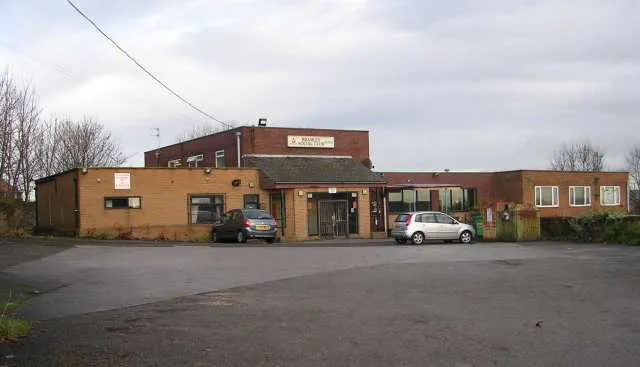
Photo: Betty Longbottom, CC BY-SA 2.0, via Wikimedia Commons
On a wet Wednesday afternoon in Winton, the social club is already busy. The kettle is on, a table near the window has been set aside for anyone who wants to sit and chat, and a volunteer is checking the list of members who have not been seen for a few weeks. It looks ordinary. That is rather the point.
Loneliness is one of those problems that rarely announces itself. It can look like a neighbour who always says they are fine, a newly retired person whose week has lost its shape, or a parent who spends most of the day with a toddler and very little adult conversation. The club's answer in 2026 is not a grand slogan. It is a steady, practical programme of small welcomes — and a belief that social spaces have a role to play in keeping communities connected.
The quiet crisis on our doorstep
National conversations about loneliness have grown louder in recent years, but the experience is still often private. People worry about being a burden. They do not want to admit that Friday night stretches ahead with nothing in it. Social clubs are well placed to notice the early signs, because they see the same faces week after week. When someone stops coming, it registers.
At Winton Social Club, that noticing has become part of the routine. A welcome desk operates at busy events. Volunteers keep an informal eye on members who live alone. Coffee mornings are deliberately kept loose — no sign-up sheet, no pressure to introduce yourself to a room. The idea is to lower the barrier enough that someone can walk in, sit down and be acknowledged without having to explain themselves.
From tea and biscuits to real connection
The club's 2026 programme includes several initiatives aimed at different kinds of isolation. There is a chatty table at the Saturday coffee morning for people who want company but not a full-on group activity. A buddy scheme pairs new members with someone who can show them around and introduce them to a few people. There are low-cost trips and walking groups, because sometimes it is easier to talk side by side than face to face.
One of the most valued schemes is the follow-up call. If a regular member has not been in for a while, a volunteer will ring to check they are all right and ask whether they need anything. It is not a welfare service. It is a neighbourly nudge. Members say the call itself matters, even if the answer is simply that they have been busy.
Margaret, a member in her seventies, puts it plainly. 'I lost my husband a few years ago and the house got very quiet,' she says. 'A friend brought me to the club for a quiz night. I did not know anyone. Now I come on a Tuesday for the craft group and I have people to sit with. It sounds like nothing, but it is everything.'
Working with local charities
The club is also building on partnerships with local charities and befriending services, referring members to specialist support when needed and sharing space for community events. The aim is not to duplicate what other organisations do, but to be a trusted front door. Someone might come to the club for a film night and mention that they are struggling. A volunteer can point them towards the right local service without making it a big deal.
That partnership approach matters because loneliness is rarely just about being alone. Money worries, poor health, caring responsibilities and transport problems all play a part. A social club cannot solve all of that. It can, however, be a place where people are seen and where they can ask for help before things become a crisis.
Why social clubs still matter
In an age of online everything, there is something stubbornly valuable about a physical room. You cannot scroll past the person sitting next to you. You have to make small talk, share a table, laugh at the same daft quiz answer. For people who are isolated, that low-level contact can be a first step back into the world.
Winton Social Club is not claiming to be a cure. Its committee is careful not to overstate what a small local venue can do. But the club is making a clear case for itself as a community asset in 2026. Membership numbers are not just about ticket sales. They are about how many people have somewhere to go on a dark evening, and how many know they will be missed if they do not turn up.
The next step is a small one
If you are lonely, the hardest part is often the first five minutes. The club's message for 2026 is that you do not need to arrive with a friend, a plan or a reason. You can come for a coffee morning, a quiz, a music night or simply to see what the place is like. Someone will say hello. It is not a grand gesture. It is a pint, a cup of tea and a chair at the table — and for many people, that is where reconnection starts.