Chalk Dust and Quiet Gloating: A Newcomer’s Guide to Winton’s Team Nights
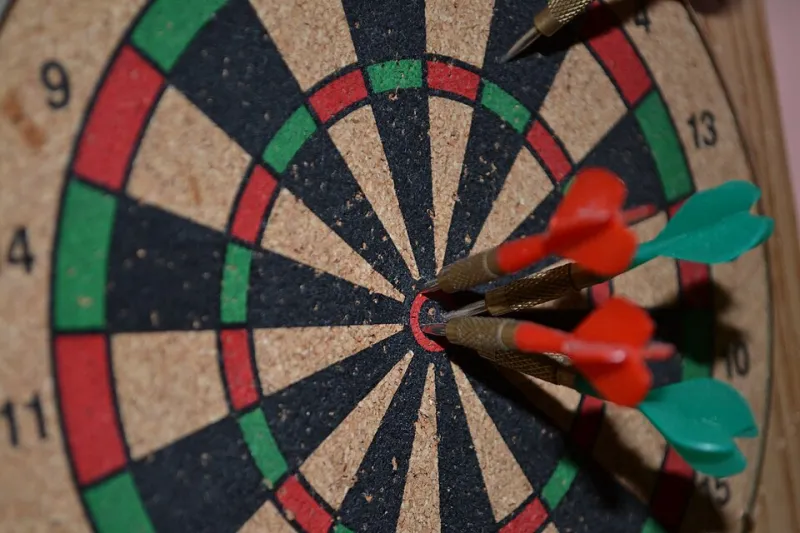
Photo: Richard Matthews, CC BY 2.0, via Wikimedia Commons
There is a league table at Winton Social Club that nobody admits to checking. It lives near the corridor, pinned to the noticeboard with the same sort of care usually reserved for a fire drill notice. Some weeks it is updated in neat biro. Other weeks it has been known to go missing under a pile of raffle tickets. And yet, ask the right person how the darts team is doing in 2026 and you will get a full breakdown, a mild complaint about the fixtures, and a reminder that the table never tells the whole story.
That is the thing about Winton’s team nights. Darts, dominoes and cards are not the loudest part of the club’s week. They are not the Friday act or the big charity night. But they are the quiet engine room of the place — the reason a Tuesday can feel as social as a Saturday, and the reason a fair few members joined in the first place.
The club within the club
On a match night, the social club does that familiar trick of becoming two rooms at once. The bar carries on as normal. Someone is talking about a coach trip. Someone else is trying to work out whether the heating is on too high or not on at all. Then, in the corner, a team sheet appears, a box of darts is opened, and the atmosphere sharpens just enough to notice.
Darts tends to get the most theatre. The oche is marked, the chalk is found, and someone makes the same joke about needing a laser measure. Dominoes is quieter, but only in volume. There is plenty of chat around the table, most of it about the tiles nobody wanted. Cards — whether it is whist, cribbage or whatever the house rules have settled on that week — has the best poker faces and the worst bluffers.
The important thing for a newcomer is that none of it is a closed shop. You do not need to be brilliant. You do not need your own engraved flights or a lucky dominoes tin. You need to turn up, be reasonably patient, and accept that every team has its own way of doing things.
What a match night actually looks like
Most team nights follow a similar pattern. Players drift in from about half seven. There is a bit of hanging around while the captain works out who is playing where. The opposition arrives, usually with the same mix of quiet confidence and last-minute panic. Someone puts a jug of water on the table. Someone else orders a round.
Then the games start, and the room settles into a rhythm. In darts, there is the soft thud of arrows, the occasional groan when a double is missed, and the very specific etiquette of not talking during a throw. Behind the oche, you stand still. You do not wave your arms about. You certainly do not offer tactical advice unless you are asked, and even then you should probably keep it to “good luck.”
Dominoes has its own code. Do not peek at someone else’s tiles. Do not sigh dramatically when the game is going badly. And if you are lucky enough to win, do not make a performance of it. A small nod is usually plenty. Cards is similar, though the house rules can vary, so it is worth asking before you assume you know what a “friendly game” means. At Winton, friendly usually means friendly, but it also means nobody is going to let you off a missed trick.
The etiquette is mostly just common sense
The unwritten rules of Winton team nights are not complicated. They boil down to: do not be a pillock, do not rush the bar queue, and do not take the result more seriously than the evening.
There are practical bits, too. If you are playing darts, learn where to stand and when to collect your arrows. If you are playing dominoes, keep the table tidy and do not spin the tiles round like you are on television. If you are playing cards, pay attention when it is your turn and do not spend ten minutes deciding between two cards that are basically the same. And whoever is keeping score deserves a bit of patience — it is a volunteer job, not a public service.
The best team nights have a bit of needle, but only the friendly sort. A close game is good. A whitewash is fine. A five-minute debate about whether a dart was in or out is part of the fabric of the club. What you will not find, at least not for long, is anyone holding a grudge. The bar is too small for that, and the next fixture comes round too quickly.
How to get a game
Newcomers often assume there is a trial system, a waiting list or some secret handshake. There is not. The simplest route is to ask behind the bar or have a word with someone on the committee. Mention that you fancy a game. They will point you towards the captain or the person who keeps the team sheet in their bag.
You do not need to commit to every week. You do not need to be available for every away match. Teams understand that people have work, families and the occasional Tuesday night where they would rather stay in. What matters is being honest about when you can play. A team with seven available players is happier than a team with four who all said yes and then remembered they had something else on.
There may be a small team fee or a contribution towards league entry, but it is never the sort of money that makes you wince. And if you are completely new to the game, say so. Someone will show you the basics. Darts is easier to pick up than most people think. Dominoes takes about ten minutes to learn and a lifetime to stop making silly mistakes. Cards depends entirely on which game you land in, but the people around the table will talk you through it.
Why the table matters, even when it doesn’t
Here is the contradiction at the heart of Winton’s team nights. Nobody wants to be the person who checks the league table every week. And yet everybody knows exactly where the teams are. There is a quiet satisfaction in seeing the darts side climb a place. There is a collective huff when the dominoes team loses a match it should have won. The card players claim not to care at all, which is usually a sign that they care quite a lot.
The table matters because it gives the week a shape. It gives people a reason to come out on a night they might otherwise spend on the sofa. It gives the club a bit of friendly rivalry with other social clubs nearby, the sort that ends with a handshake and a shared joke about the fixtures. And it gives members something to talk about that is not the weather, the parking or the price of a pint.
But the table is not really the point. The point is the Tuesday night when someone’s granddaughter comes along and wins her first game of dominoes. The point is the darts captain who has been playing for years and still gets nervous on a deciding leg. The point is the card table that has been going so long nobody can remember who dealt first.
So yes, the league sheet is there. It is pinned up, slightly askew. People will deny looking at it. They will also know exactly what it says. That is Winton for you — quiet competition, loud company, and a team night that is always better than the telly.